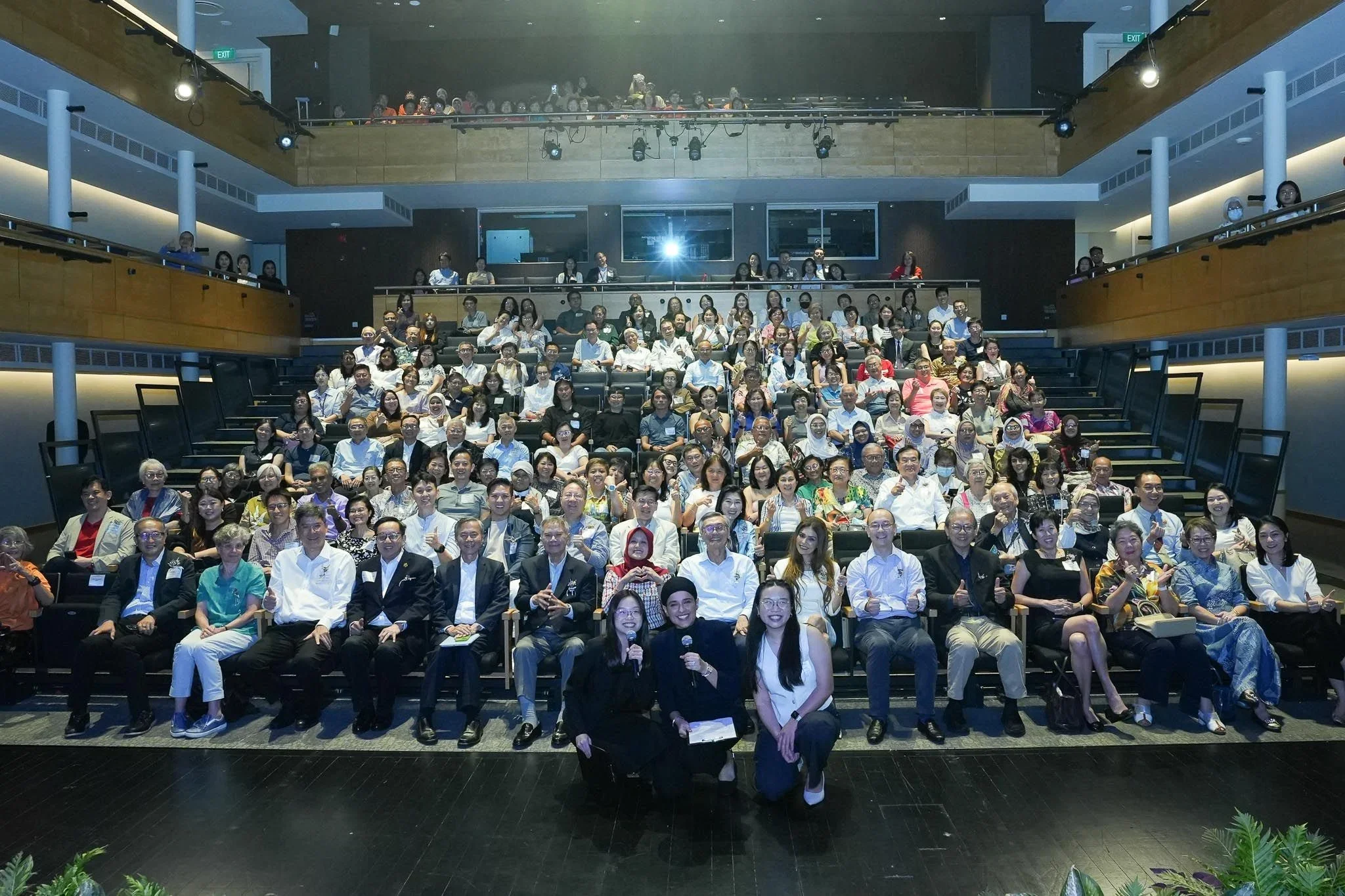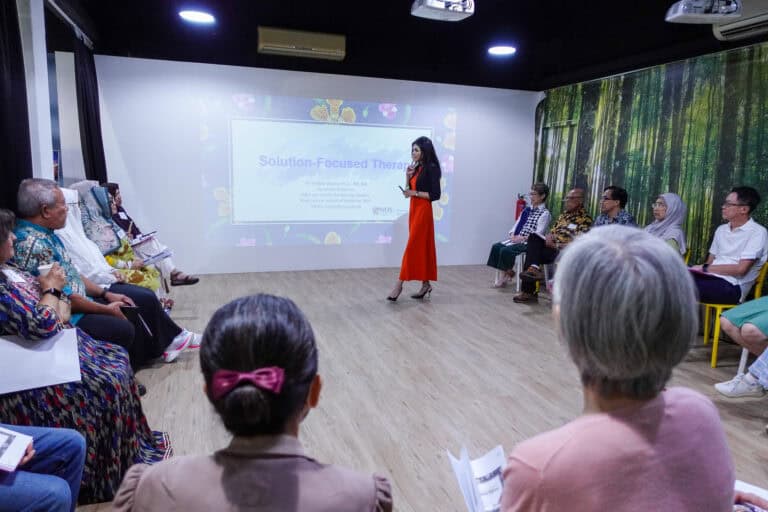

The room was full of friends and familiar faces, many of them no strangers to MSC's work: board members, researchers, partners, donors, and community members who have been part of the Centre's story from its earliest days. They came together for a morning titled "Mind Science: Interventions Now & the Future", a chance to look at how far the Centre has come and where it is going next.
MSC Chairman Mr Abdullah Tarmugi explained the title in his Opening Address. "'Interventions Now' is about what already works – approaches we have tested and put into people's hands," he said. "'The Future' is just as important. Mental health needs keep changing, and MSC's job is to keep up with them, not stop at what we have already achieved. Ten years on, we are still asking what comes next."
Where it started
MSC's story began in the community. The Jurong Ageing Study, the first of its kind in the region, was conducted with older residents at Jurong Point. What the study found to work was then turned into the Age Well Everyday (AWE) programme, which brings those approaches to seniors in the community. Some of the people in the audience have volunteered with AWE since the very beginning. Their dedication has been central to MSC's work: by running activities and showing up for residents week after week, they are the reason research findings reach people in the community.
From there, the Centre's work widened to young people. Its youth resilience research rests on the idea that good mental health is more than the absence of struggle. It also depends on the foundations that help people bounce back when things get hard.
That community-first approach still shapes the Centre today. As Director Associate Professor Shefaly Shorey put it in her remarks: "At MSC, translation runs both ways. Research informs communities, and communities shape the research itself. Volunteers, neighbours and facilitators are not simply recipients of evidence – they help generate it."
A morning in voices
The programme opened with a performance by 50 members of the Voices of Singapore Silver Voices choir. For MSC, this was more than an opening act. Many of the singers took part in the Jurong Ageing Study, including a two-year trial at Jurong Point in which 93 older adults took weekly choral singing or health education sessions. The trial found that choral singing was as effective as the health education programme in delaying cognitive decline. Ten years on, they are still singing, and still as sharp as ever.

The choir was followed by remarks from Emeritus Professor Kua Ee Heok and a video looking back on the Centre's first decade.
Keynote speaker Professor Claire Henderson of King's College London, one of the leading voices in mental health implementation research, argued that producing evidence is no longer the field's hardest problem. The harder work is getting that evidence into practice at scale. She drew on examples such as Advance Choice Documents, which let people set out their treatment preferences before a mental health crisis, and Recovery Colleges, which build mental health education around lived experience. Real-world impact, she said, needs equity by design, thinking at the level of whole systems, evaluation that captures complexity rather than flattening it, and long-term collaboration across sectors.
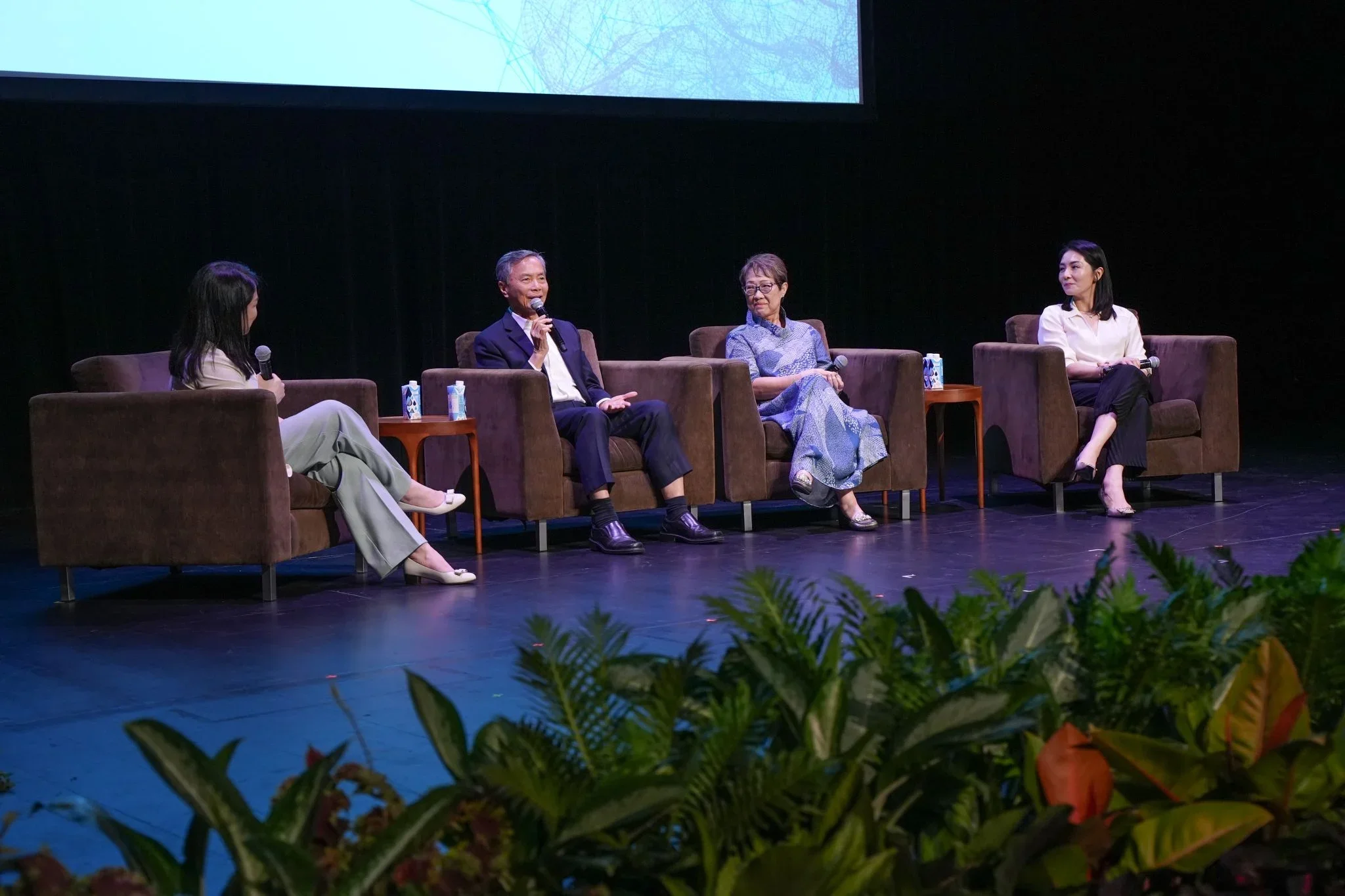
The Fireside Chat, "Thriving Across the Life Course", turned the discussion personal. Moderated by Adjunct Assistant Professor Amanda Chan, it brought together NUS Chairman Mr Hsieh Fu Hua, mindfulness practitioner and hospice volunteer Mrs Wee Geok Hua, and paediatric neuroimaging researcher Dr Tan Ai Peng.
Mr Hsieh spoke candidly about his own mental health struggles, believing that being open about such needs helps others do the same. During a period of intense professional pressure, he met the late Mr Wee Sin Tho, who was then facing a cancer diagnosis. Mr Wee's composure, built through years of mindfulness practice, inspired Mr Hsieh to begin practising himself. The experience shaped how seriously he takes mental health as an institutional leader, and his commitment to making sure NUS staff have meaningful support in practice, not only on paper.
The group we overlook
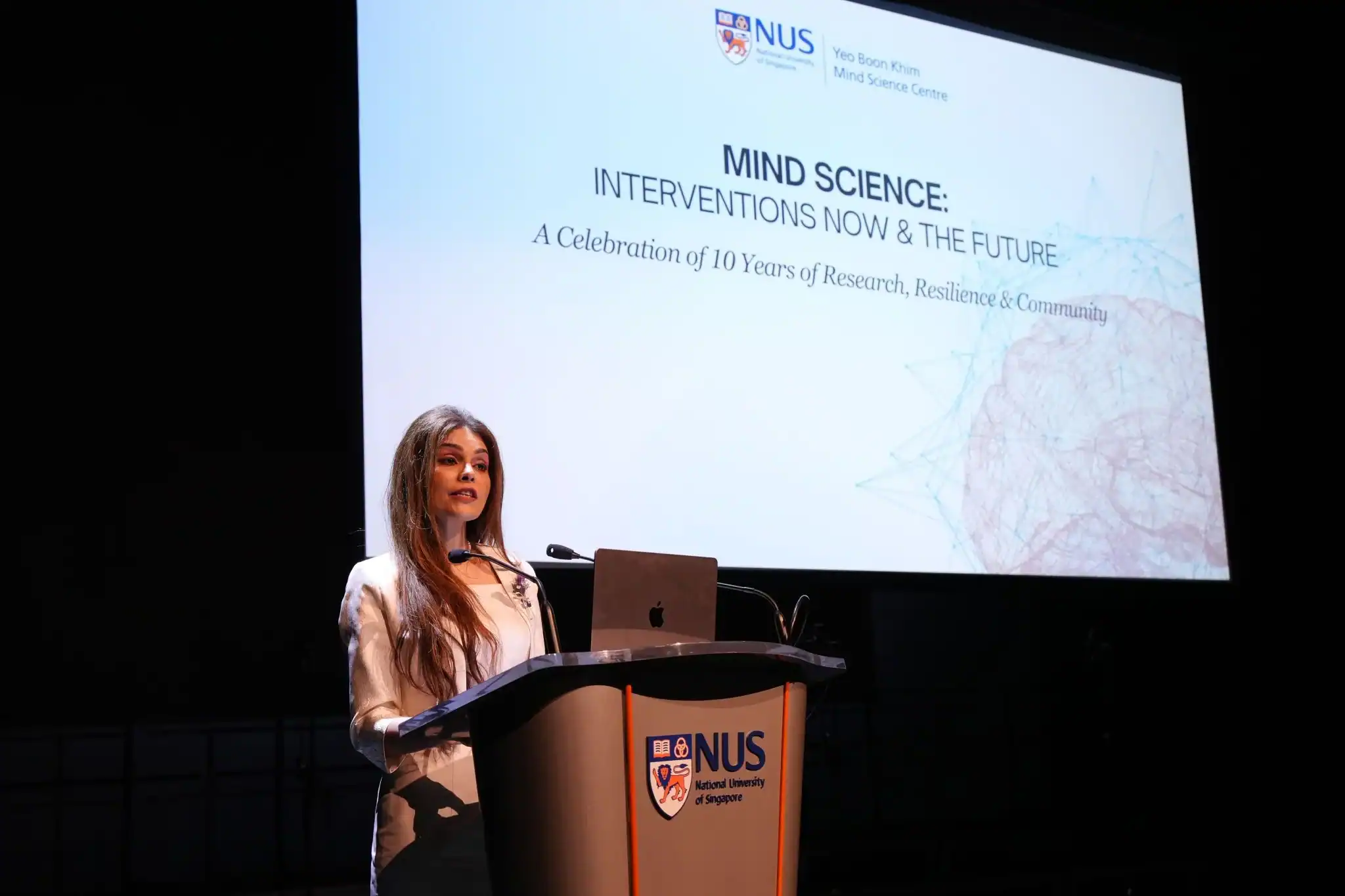
Conversations about mental health often focus on the young and the old. In her Director's Remarks, A/Prof Shorey turned attention to the people in between.
"Working adults are under-served – not because programmes are absent, but because what exists is largely surface-level: tips, apps, workshops. These reach the symptom," she said. "As Singapore's workforce ages and more adults balance work with caregiving responsibilities, protecting mental wellbeing across longer working lives becomes increasingly important."
Her answer was to start further upstream. "Upstream intervention therefore means more than teaching people to cope. It means changing workplace conditions that make silence the rational choice."

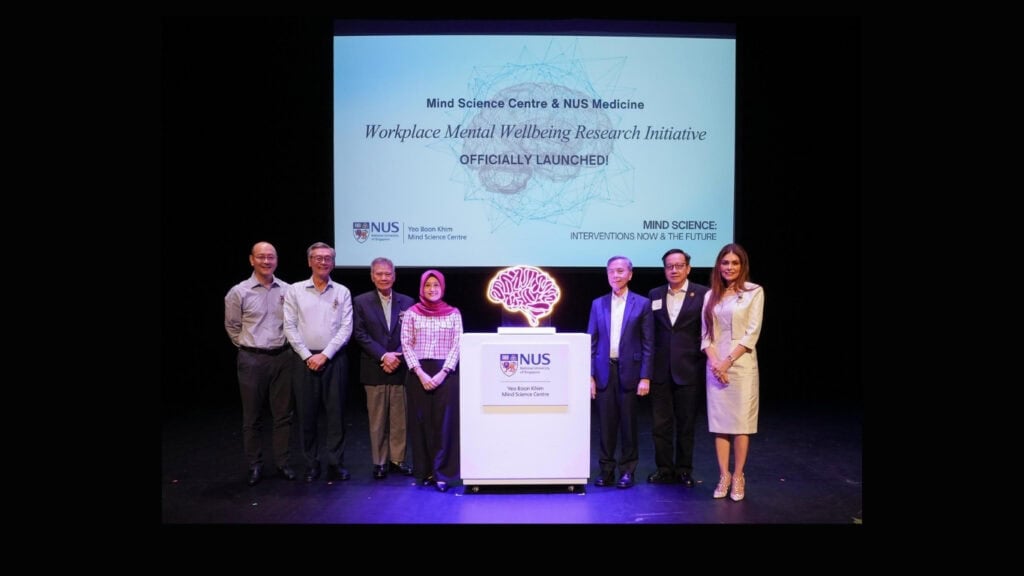
Guest of Honour Mdm Rahayu Mahzam, Minister of State for Digital Development and Information and for Health, then addressed guests. She joined MSC and NUS leaders on stage to launch the Mind Science Centre x NUS Medicine Workplace Mental Wellbeing Research Initiative, the Centre's next major research focus.
What comes next
Over the past ten years, understanding of mental health in Singapore has grown. The conversation has moved beyond awareness to the support systems people need and the trained professionals who can provide that support. MSC has grown with it. Through the Master of Clinical Mental Health & Psychotherapy (MCMHP) programme, the Centre now trains frontline professionals in social service, education and healthcare. Students from the programme's first batch presented their capstone posters at the event, alongside an exhibition tracing the Centre's decade of work.
The aim is support that comes in many layers, with help available well before things reach a crisis.
A/Prof Shorey closed with her vision for the decade ahead: "I envision an MSC that is recognised not only for scientific excellence, but also for compassion, innovation and societal impact. A Centre that develops the next generation of mental health leaders. A Centre that shapes national policy. A Centre that continues to ask difficult questions — and works tirelessly to find practical answers."
What comes next
None of this happens alone. Mr Tarmugi thanked the Centre's donors, partners, Board members and supporters. "Research takes years to show results," he said. "You supported this Centre before we could prove it would work, because you believed in the idea and the people behind it."
Here's to the next ten years.