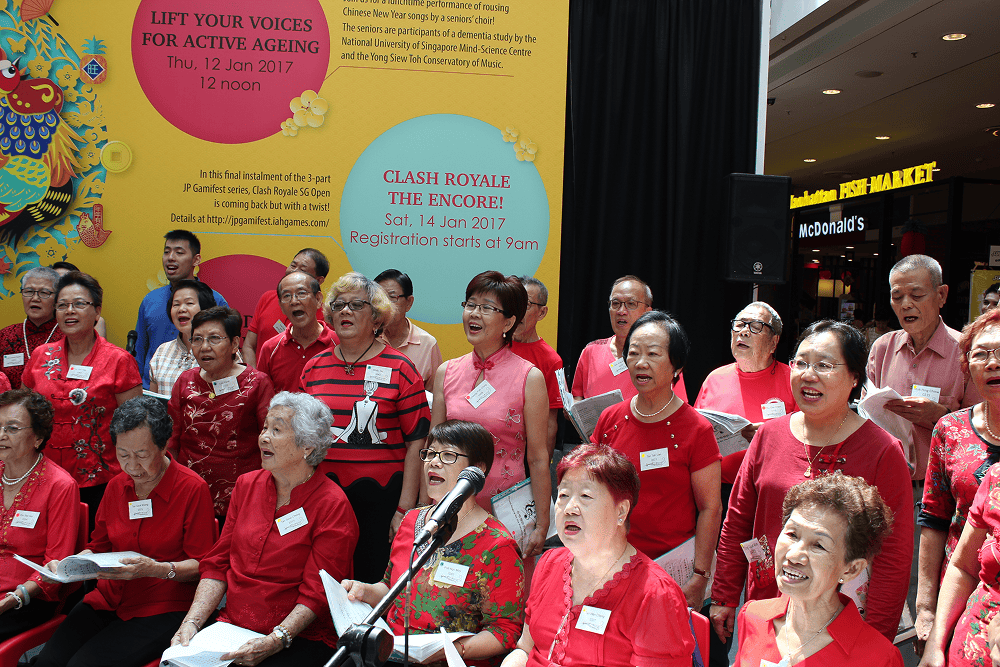

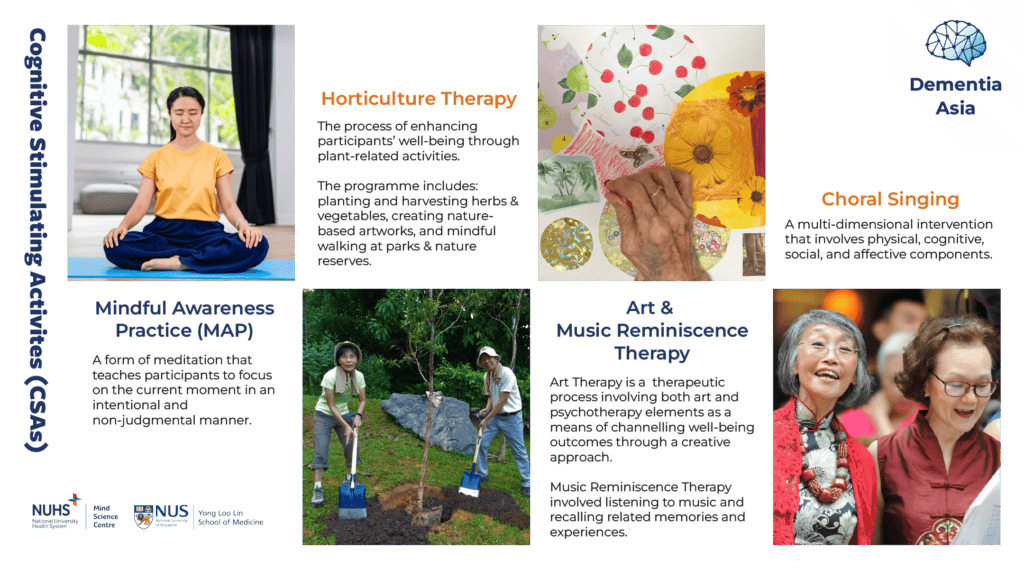
Results from the study showed sustained improvements in global cognitive function in those who joined at least one activity. In addition, there were also improvements in numerous cognitive domains including: short-term memory, attention span, orientation to time and space, language skills, as well as visual-spatial functions.
What are Cognitive Stimulating Activities (CSAs)?
Importance of a Follow-up Study on CSAs
MSC’s Novel Community-based Cognitive Stimulating Activities
From 2014 to 2019, Mind Science Centre embarked on four separate studies on:
All these participants are part of larger cohort recruited for the 10-year longitudinal Jurong Ageing Study. This overarching study investigated a multitude of biological, psychosocial, and social factors impacting cognitive function in older adults.
Assessment Tools to Measure Cognitive Function in Older Adults
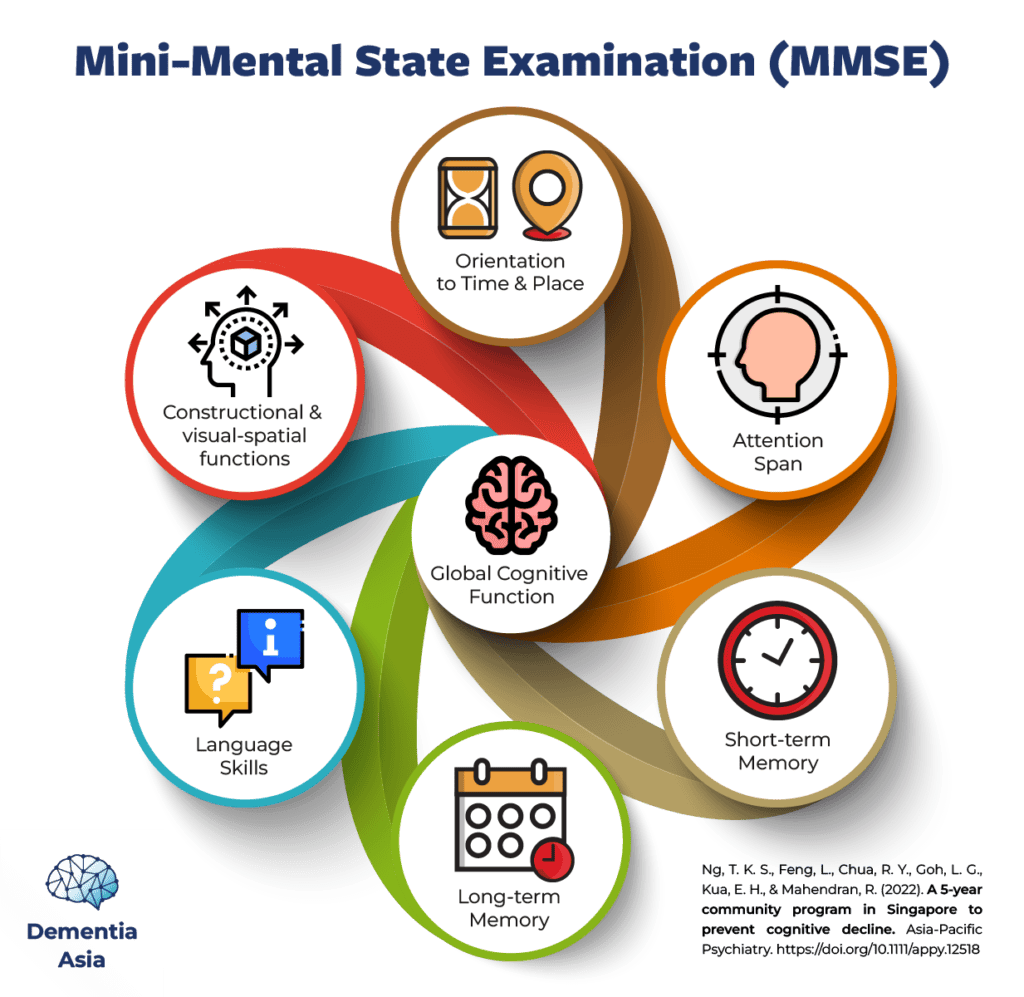
In this follow-up study participants were screened with the Mandarin-translated modified version of the mini-mental state examination (MMSE). The test was previously validated for use in the Singaporean population (Feng et al., 2012), with total scores indicating global cognitive function.
It also comprises of sub-scales assessing various cognitive domains including:
- Orientation to time and place (knowing the date and where you are)
- Attention span
- Short-term memory (immediate recall)
- Long-term memory (delayed recall)
- Language skills
- Constructional and visual-spatial functions (visual and spatial relationship between objects)
Improvements in Global Cognitive Function Following Cognitive Stimulating Activities (CSAs)
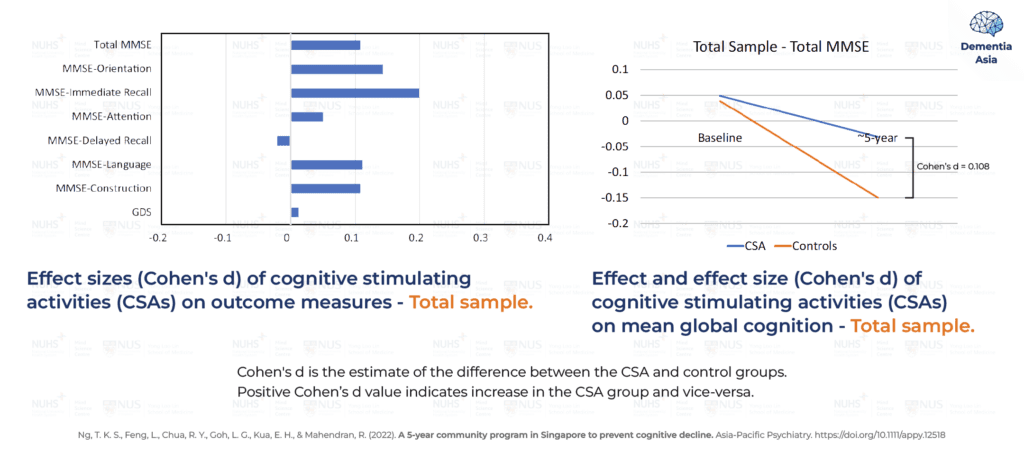
Improvements in overall cognitive function, especially in immediate memory is quite remarkable as it is usually one of the earliest signs of cognitive decline, and in extension, dementia.
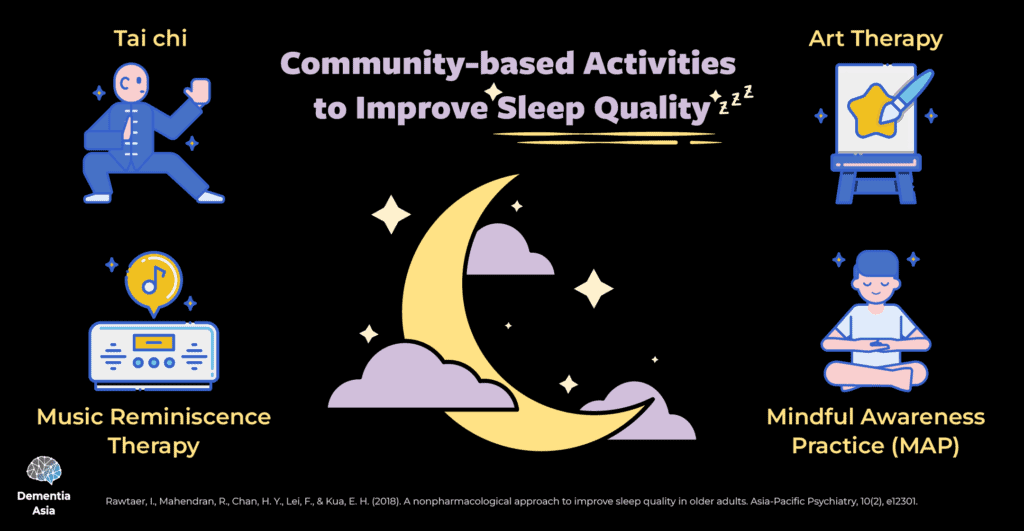
Our 5-year follow-up study show that community-based cognitive stimulating activities such as mindfulness practice, horticulture, art therapy, and choir singing could really benefit older adults in the long run.
Moderate effect size found in the MCI sub-group
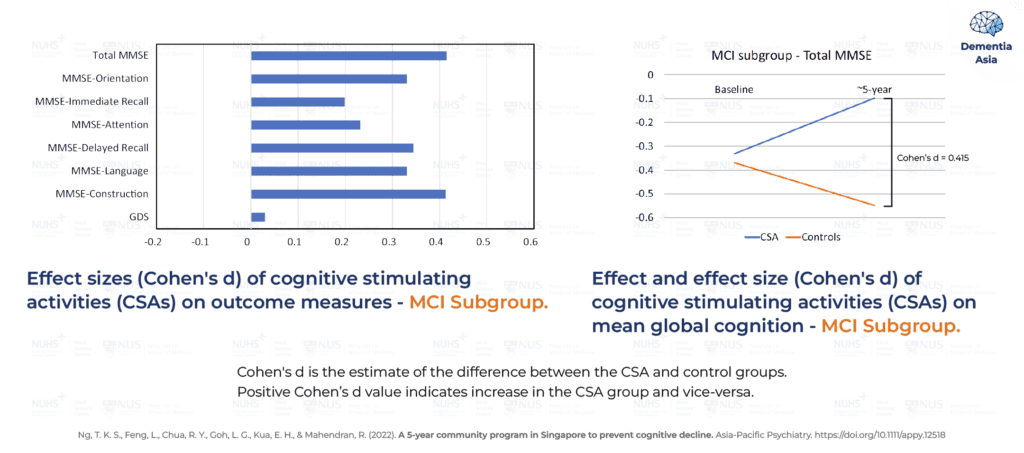
Looking specifically into only those with mild cognitive impairment (MCI), we can observe a trend toward improvement in total cognition scores. This again contrasts with the control group whose scores deteriorated over the follow-up period as shown in the figure above. The difference between the two groups has a medium effect size (0.415), suggesting moderate practical significance.
In addition, there is an increase in ALL domain scores with effect sizes ranging from small (0.199) to medium (0.413).
Results from our study showed that there are greater improvements in those with MCI as compared to cognitively healthy participants. These findings further highlighted MCI as a potential interventional target population for future studies and implementation of CSAs.
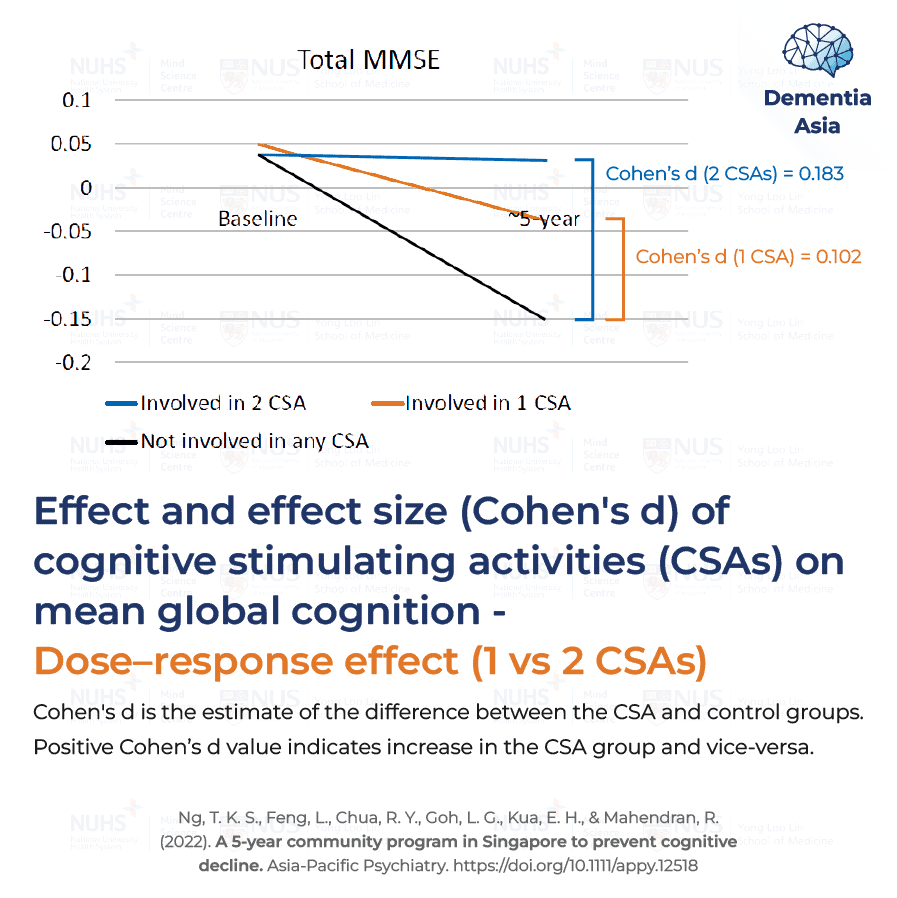
Involvement in multiple activities were associated with greater improvement in cognitive scores
Take Charge of Your Ageing with Cognitive Stimulating Activities!
Free Mindfulness Practice Every Friday

Ng, T. K. S., Feng, L., Chua, R. Y., Goh, L. G., Kua, E. H., & Mahendran, R. (2022). A 5‐year community program in Singapore to prevent cognitive decline. Asia-Pacific Psychiatry. https://doi.org/10.1111/appy.12518
Feng. (2012). The Modified Mini-Mental State Examination test: normative data for Singapore Chinese older adults and its performance in detecting early cognitive impairment. Singapore Medical Journal, 53(7). https://pubmed.ncbi.nlm.nih.gov/22815014/
There are currently no updates. This is the latest version available.