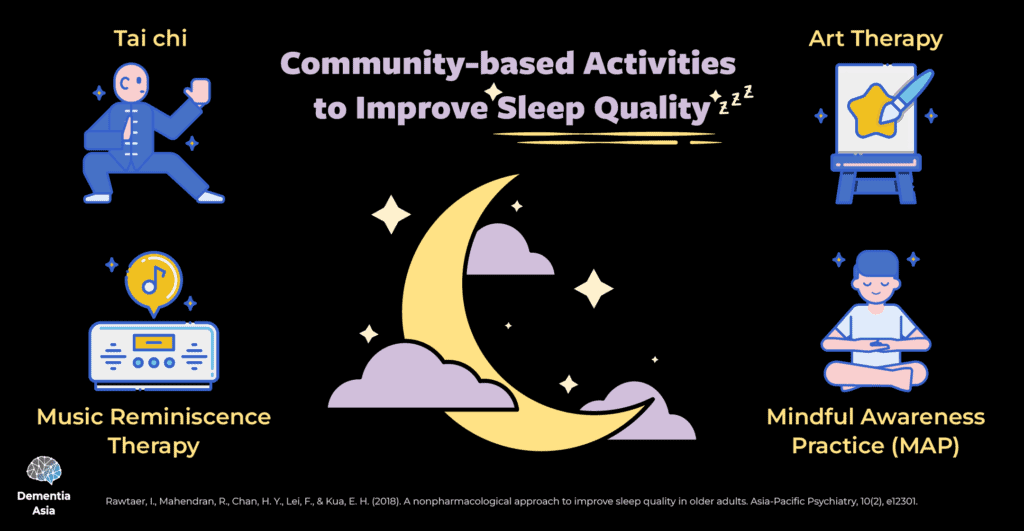

One such area is Art Therapy (AT), with a body of evidence manifesting its engagement on cognitive functioning as well as how it can contribute to the lives of people living with dementia.
What is Art Therapy (AT)?
Art Therapy (AT) Research at Mind Science Centre
Interventions Implemented on Older Adults with MCI
Art Therapy (AT) constitutes two components
Foremost, art pieces were selected by curators from the National Gallery and the National University of Singapore Museum, who developed the activity sessions in consultation with the study team, involving psychiatrists and therapists. The emphasis was on the relevance of the artworks to the elderly, in terms of themes and events from the country’s past. Guided viewing and cognitive evaluation of artworks at the respective sites was conducted as a group activity by trained staff and involved narration of thoughts and inner experiences.
Following up with visual art production as the second component, which included physical creation of themed artwork (e.g. family, relationships) using a variety of materials to create drawings, collages, symbol work or clay sculptures. Subsequently, image appreciation activities were conducted to gain insights and discuss feelings about the pieces that were produced.

Music Reminiscence Activity (MRA)
Control Group (CG)
Managing MCI
Unfortunately, there is still no cure for cognitive decline. The risk of depression and anxiety is also higher in those with MCI as compared to the general population.
The research has since shifted towards non-pharmaceutical interventions to improve emotional states, enhance cognitive function, and delay or even reverse the symptoms of cognitive decline.
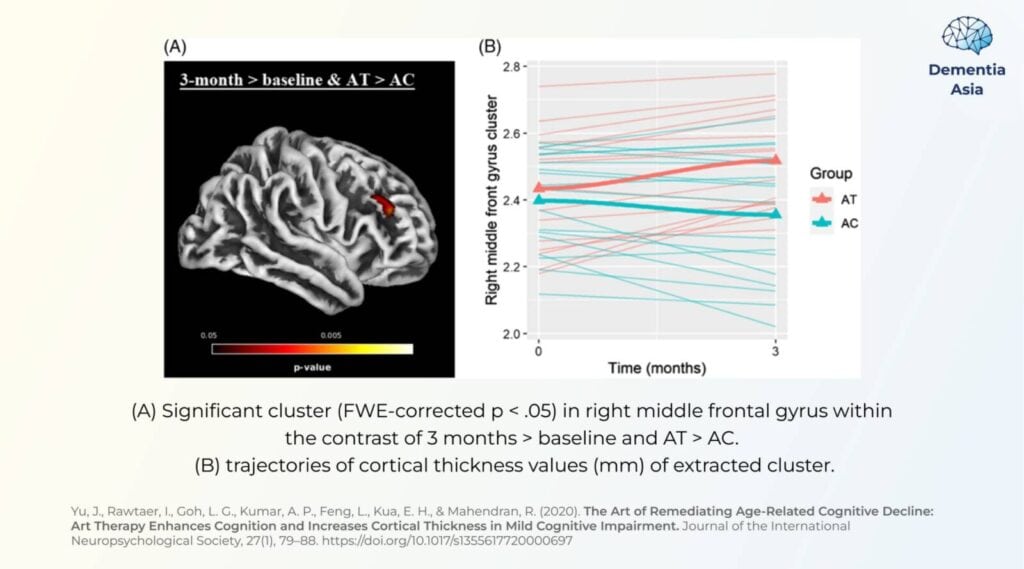
Significant Gains in Memory Following Art Therapy
Learn More through Our Exhibition
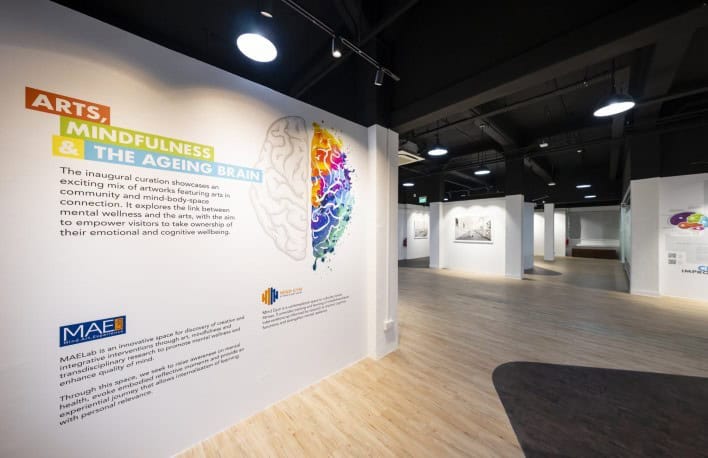
Mind Science Centre curated an exhibition titled “Arts, Mindfulness and the Ageing Brain”, presented at our Mind Art Experiential Lab (MAELab) located at Alexandra Hospital.
The curation addresses ageing as inevitable but helps inform viewers to have control over how they age. It showcases local research evidence on how lifestyle changes one can engage in as interventions to mitigate the effects of ageing. The viewers can learn about how they can prevent cognitive decline and improve their brain health through art, mindfulness, and tea drinking.
KUA, E. H. & MAHENDRAN, R. 2022. Ageing with dignity : a 10-year study on positive ageing and dementia prevention in Singapore Singapore, Write Editions,.
LEE, R., WONG, J., SHOON, W. L., GANDHI, M., LEI, F., KUA, E., RAWTAER, I. & MAHENDRAN, R. 2019. Art therapy for the prevention of cognitive decline. The Arts in Psychotherapy, 64, 20-25.
MAHENDRAN, R., GANDHI, M., MOORAKONDA, R. B., WONG, J., KANCHI, M. M., FAM, J., RAWTAER, I., KUMAR, A. P., FENG, L. & KUA, E. H. 2018. Art therapy is associated with sustained improvement in cognitive function in the elderly with mild neurocognitive disorder: findings from a pilot randomized controlled trial for art therapy and music reminiscence activity versus usual care. Trials, 19, 1-10.
PETERSEN, R. C. 2004. Mild cognitive impairment as a diagnostic entity. Journal of internal medicine, 256, 183-194.
YU, J., RAWTAER, I., GOH, L. G., KUMAR, A. P., FENG, L., KUA, E. H. & MAHENDRAN, R. 2021. The art of remediating age-related cognitive decline: art therapy enhances cognition and increases cortical thickness in mild cognitive impairment. Journal of the International Neuropsychological Society, 27, 79-88.
There are currently no updates. This is the latest version available.