
Gardening and Horticulture Therapy
Impact of Gardening on Biomarkers
- Significant reduction in plasma IL-6 level in the horticulture therapy group
- Significant reductions in plasma CXCL12 (SDF-1α), CXCL5 (RANTES), and BDNF in the control group, while levels were maintained in the horticulture therapy group
- Reduced plasma IL-6 levels suggest improved inflammatory responses and slower ageing of the immune T cells. This suggests improved immune response in the horticulture therapy group.
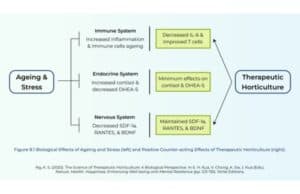
Maintained SDF-1α and RANTES levels are also notable as these suggest better blood supply to the brain and ability to repair and protect the brain from degeneration, as compared to the control group (Ng et al., 2018; Ng, 2020).
Horticulture Therapy Improves Life Quality and Social Connectedness
Implementation in Singapore: City in Nature
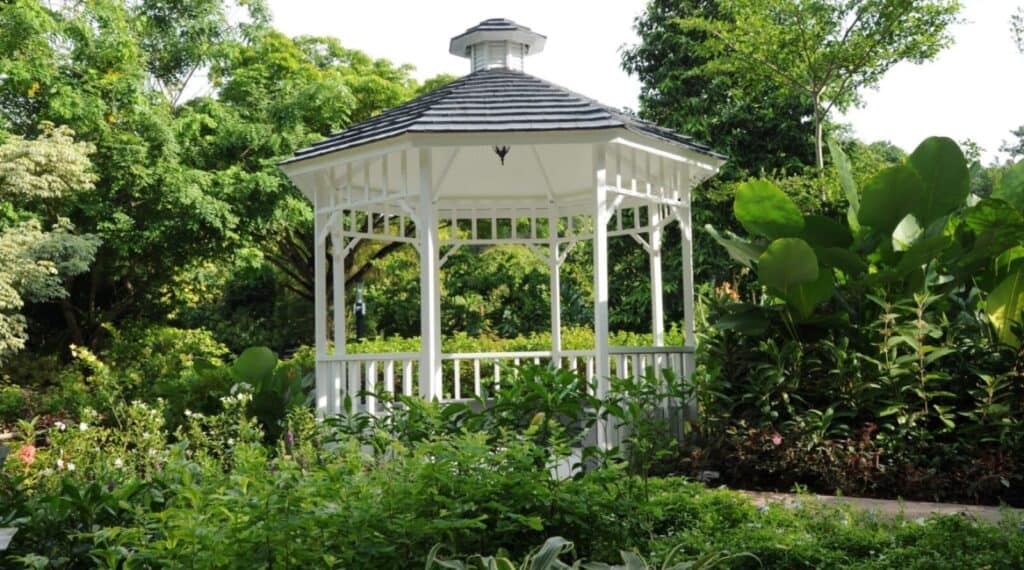
Therapeutic Garden at HortPark (Image source: National Parks)
Ng, K., Sia, A., Ng, M., Tan, C., Chan, H., Tan, C., Rawtaer, I., Feng, L., Mahendran, R., Larbi, A., Kua, E., & Ho, R. (2018). Effects of Horticultural Therapy on Asian Older Adults: A Randomized Controlled Trial. International Journal of Environmental Research and Public Health, 15(8), 1705. https://doi.org/10.3390/ijerph15081705
Kua, E. H. & Ng, K. S. (2022). Therapeutic Gardens. In E. H. Kua & R. Mahendran (Eds.), Ageing with Dignity: A 10-year Study on Positive Ageing and Dementia Prevention in Singapore (pp. 39-42). Write Editions.
Ng, K. S. (2020). The Science of Therapeutic Horticulture: A Biological Perspective. In E. H. Kua, V. Chong, A. Sia, J. Kua (Eds.), Nature. Health. Happiness: Enhancing Well-being and Mental Resilience (pp. 123-135). Write Editions.
Sia, A. (2020). Green Spaces in Cities. In E. H. Kua, V. Chong, A. Sia, J. Kua (Eds.), Nature. Health. Happiness: Enhancing Well-being and Mental Resilience (pp. 197-211). Write Editions.
There are currently no updates. This is the latest version available.