This article is written based on the presentation done by Prof Wang De Yun at the NUS Psychiatry Symposium on Ageing-in-Place held on 27 Apr 2023.
Olfactory impairment, or more commonly referred to as sense of smell, is ageing related. The ability to detect and identify smell has also long been linked with cognitive decline in older adults. However, there remains questions on its association with mild cognitive impairment (MCI) and by extension, dementia.
As part of the Yeo Boon Khim Mind Science Centre’s Community Health and Intergenerational (CHI) Study, Prof Wang De Yun from NUS Department of Otolaryngology, conducted a study to assess the olfactory function of community-dwelling older adults in Singapore and its link with their cognitive function. For this study, researchers at NUS developed a localised version of the nine-item smell test to better screen the population.
Smell ability as a predictive tool for Cognitive Impairment
When it comes to modifiable risks of dementia, the focus is often on vision and hearing impairments rather than smell impairment. Nonetheless, there are studies indicating a potential link between smell identification ability and MCI.
A meta-analysis found that smell identification is impaired in those with MCI compared with healthy older adults. Longitudinal studies also showed that cognitively healthy individuals with smell impairments at baseline subsequently developed MCI in the follow-up.
Culture specific smell test developed in NUS
Study Design
Participants aged 60 years and above were recruited from a larger epidemiological study titled Community Health and Intergenerational (CHI) study. The smell test and neuropsychological testing are part of a 10-hour assessment done over five separate visits. More details on that can be found in the CHI study protocol.
Smell Tests For Cognitive Impairment
The locally developed nine-item smell test was used to assess smell detection and identification. The test was conducted in an interview format with each odour sample (in total 9) given only once. Between each odour, there was at least a 30-second time interval to prevent sensory fatigue.
For the smell detection task, participants were asked to respond yes or no based on their perception of the presence of an odour. Each successful detection was scored a point.
For the smell identification task, participants were asked to identify the same test odour before choosing through 4 narrated answer choices. If they thought none of the answer choices matched the test odour, they were allowed to describe the odour instead. Each successful identification was scored a point.
Cognitive Function Tests - Testing for Cognitive Impairment
Participants’ cognition was measured with the modified mini-mental state examination (MMSE) scale, clinical dementia rating (CDR) scale, and a validated battery of neurocognitive tests. The protocol is described in more details here.
Diagnosis of the participants’ cognitive status was made at consensus review meetings involving two psychiatrists and a neuropsychologist. Participants were categorised into normal ageing, MCI, or dementia and further subtyped as amnestic or non-amnestic, and single or multiple domain.
- NA (normal ageing)
- naMCI_SD (non-amnestic mild cognitive impairment, single domain)
- naMCI_MD (non-amnestic mild cognitive impairment, multiple domains)
- aMCI_SD (amnestic mild cognitive impairment, single domain)
- aMCI_MD (amnestic mild cognitive impairment, multiple domains)
- Dementia
Smell test results in Singapore community-dwelling older adults
Smell detection is significantly lower in the above 80 age group
The study found significant age-related changes in smell detection in the 80-89 age group as compared to the younger age groups. No significant differences in smell detection score were found between the different cognitive states (normal ageing and MCI).
Smell identification scores tend to decrease with age
Gender differences in smell identification
Females had significantly higher scores than males in the smell identification test.
Smell identification scores in those with mild cognitive impairment (MCI)
In comparing the smell identification scores of those in the normal ageing group and those with MCI, findings revealed that those with MCI had slightly lower scores, although the difference did not reach statistical significance.
Takeaway message: olfactory impairment is a potential screening marker for cognitive decline
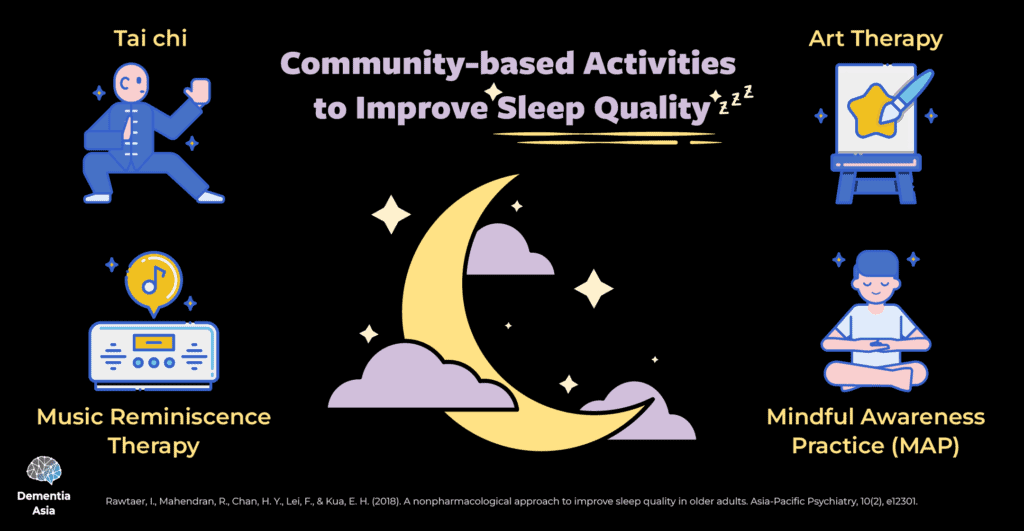
Take charge of your ageing with community-based activities!
Mild cognitive impairment (MCI) is a pre-dementia stage between normal ageing and dementia. While there is currently no cure for dementia, it is possible to slow or reverse MCI through cognitive stimulating activities.
Yap AC, Mahendran R, Kua EH, Zhou W and Wang DY (2022) Olfactory dysfunction is associated with mild cognitive impairment in community-dwelling older adults. Front. Aging Neurosci. 14:930686. doi: 10.3389/fnagi.2022.930686
Wang, DY (2023, Apr 27). Olfactory dysfunction is associated with mild cognitive impairment in community-dwelling older adults. In NUS Psychiatry Symposium on Ageing-in-Place, April 27, 2023.
There are currently no updates. This is the latest version available.